


Situated in the north of the Deux-Sèvres department, the Thouarsais is ideally located between the Loire Valley and the Atlantic coast. The 24 communes offer a varied landscape of agricultural plains, hedged farmland and vineyards. The GR36 and the Vélo Francette, two major national walking and cycling routes, cross the area and allow visitors to discover our natural, historical, cultural and leisure heritage.
Pierrefitte
The name Pierrefitte comes from the Latin Petra ficta, meaning “stone set in the ground”—a reference to a dolmen. The Deux-Sèvres region is home to many megalithic sites, especially in the Thouarsais area. These ancient structures are part of a funerary tradition that includes dolmen cemeteries and large burial mounds (tumuli).
There are about a dozen towns in France named Pierrefitte. In the past, a dolmen stood near the church in this village.
While stained glass windows in rural churches across the Poitou region are usually from the 19th century, most of the ones in Pierrefitte’s church date from 1947. They were made by Lux Fournier and Sons, a renowned workshop from Tours.
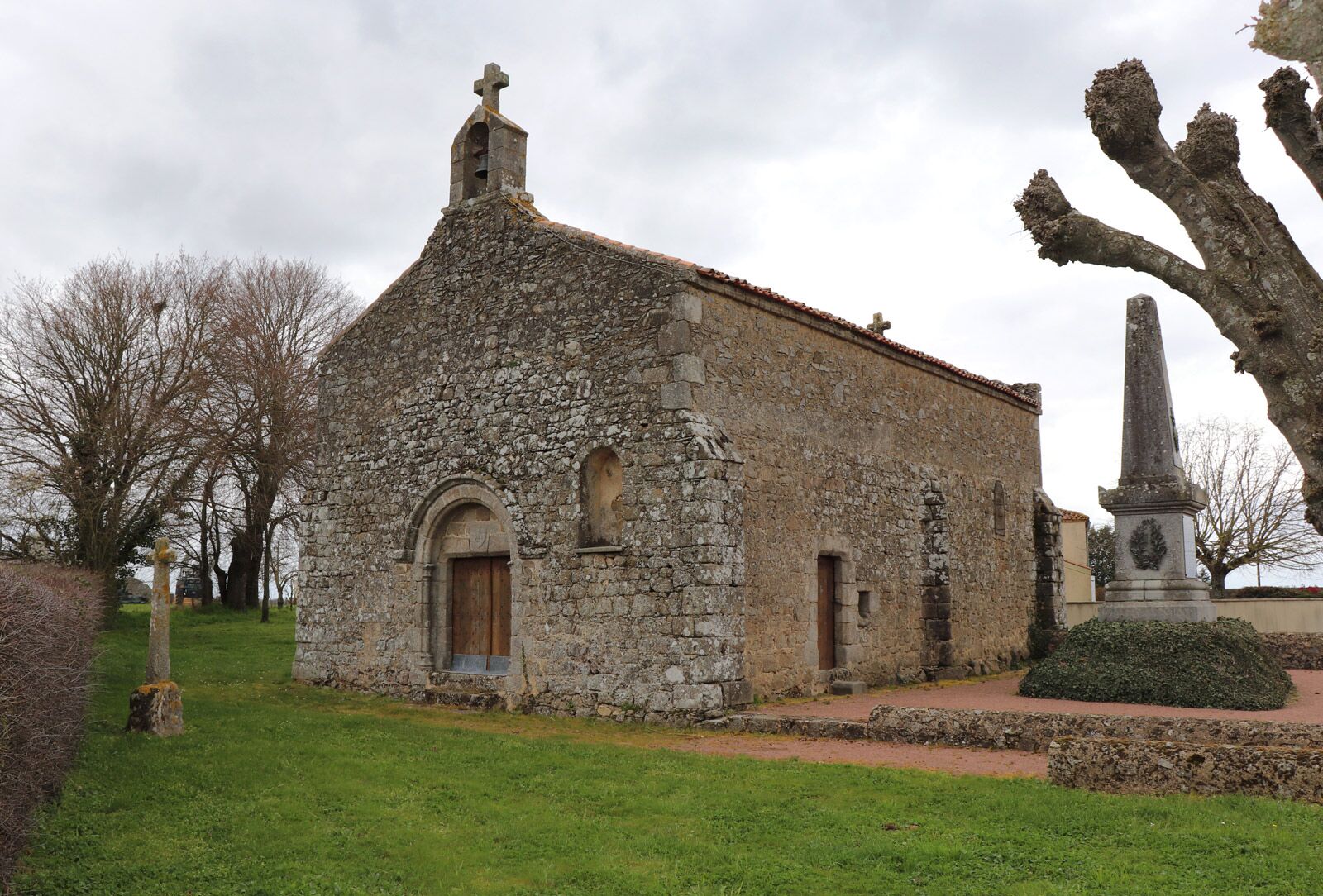
Not far from the village stands a small rectangular chapel featuring a Gothic window on its eastern wall. It was founded after 1391, according to the will of Perceval de Couloigne, who served as seneschal of Poitou in 1374–1375.
Gallery

